What Is Bitcoin?
Bitcoin (BTC) is the cryptocurrency that started it all. Launched in 2009 by the pseudonymous Satoshi Nakamoto, it set out to be 'electronic cash' for the internet. Here's how it works and why it still matters.
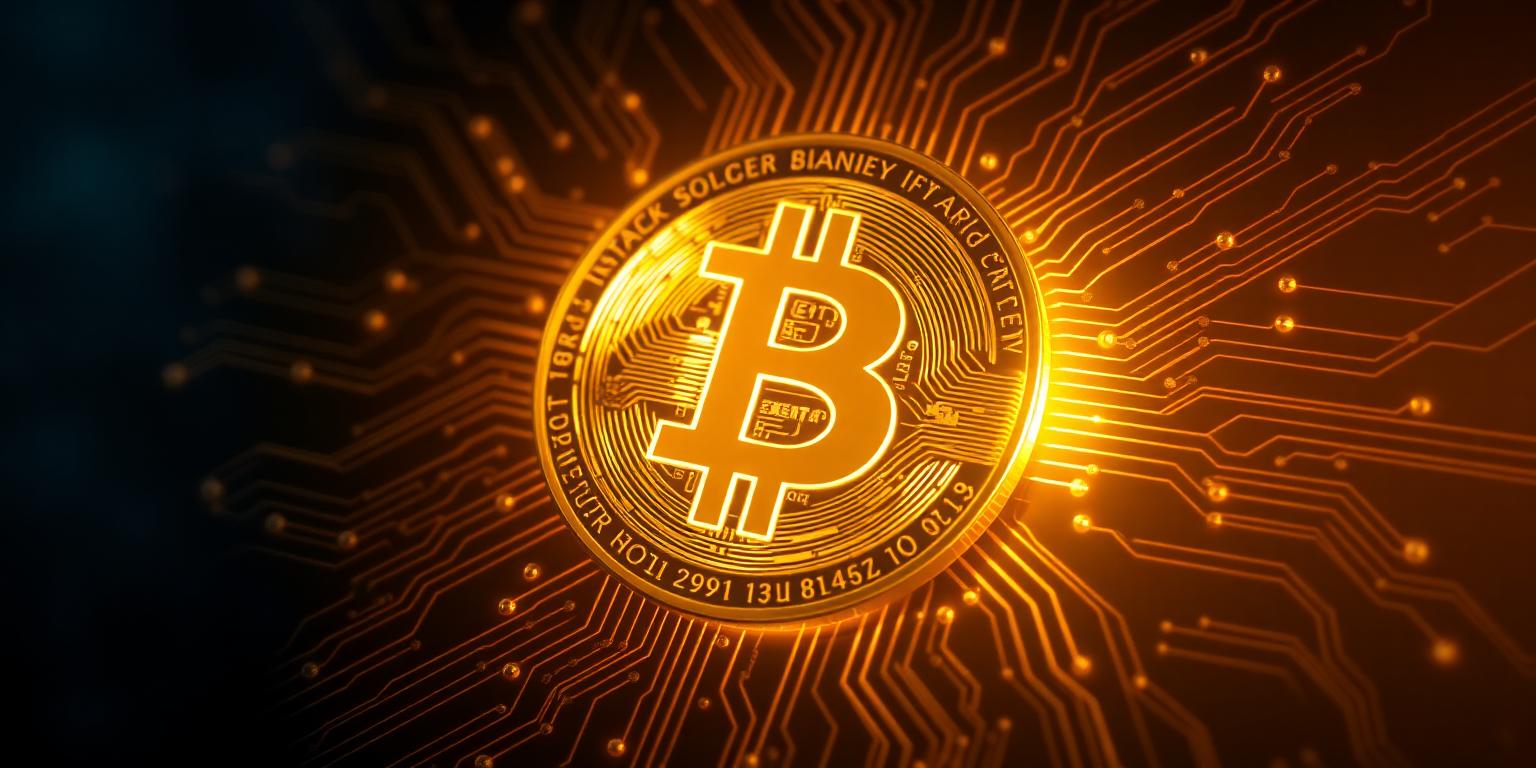
The origin story
In October 2008, in the middle of the global financial crisis, an unknown person or group writing under the name Satoshi Nakamoto published a 9-page paper titled 'Bitcoin: A Peer-to-Peer Electronic Cash System'. A few months later, on January 3, 2009, they mined the first block of the Bitcoin blockchain — embedding a newspaper headline about bank bailouts into it as a timestamp.
Satoshi disappeared in 2011 and has never been identified. The network has run continuously ever since, with no CEO, no head office, and no off switch.
How Bitcoin works
Bitcoin transactions are signed with a private key and broadcast to a global network of nodes. Specialized computers called miners compete to package valid transactions into a new block roughly every 10 minutes. Whichever miner solves a difficult mathematical puzzle first earns newly issued bitcoin plus the transaction fees in that block — this is called 'proof of work'.
Every block links cryptographically to the previous one, forming an immutable chain. Rewriting history would require redoing all that work faster than the rest of the world combined — which is why Bitcoin's ledger is considered effectively unchangeable.
The 21 million cap and the halving
Bitcoin has a hard-coded maximum supply of 21 million coins. New BTC enters circulation only as a reward to miners, and that reward cuts in half roughly every four years — an event called the 'halving'. The latest halving was in April 2024, dropping the per-block reward from 6.25 to 3.125 BTC.
This scheduled scarcity is the main reason people call Bitcoin 'digital gold'. The last coin is expected to be mined around the year 2140.
How to buy and store Bitcoin safely
The simplest path is to sign up for a reputable exchange (Coinbase, Kraken, Binance, etc.), verify your identity, deposit local currency, and buy BTC. You don't have to buy a whole coin — the smallest unit is a 'satoshi', or 0.00000001 BTC.
If you plan to hold for the long term, move your coins off the exchange into a wallet where only you hold the keys — ideally a hardware wallet. The crypto saying is: 'not your keys, not your coins'.
Keep reading
Read the latest Bitcoin newsFrequently Asked Questions
Who created Bitcoin?+
An anonymous person or group using the name Satoshi Nakamoto. Their identity has never been confirmed.
How many bitcoins exist?+
About 19.7 million have been mined out of a hard cap of 21 million. The remainder will trickle in over the next century.
Why does Bitcoin use so much energy?+
Mining secures the network by making attacks expensive. Increasingly, miners use stranded renewable energy and grid-balancing power that would otherwise be wasted.
Is Bitcoin anonymous?+
Pseudonymous, not anonymous. Addresses don't include your name, but every transaction is public and can often be traced back to a person.
Can governments shut Bitcoin down?+
They can make it inconvenient — banning exchanges, taxing aggressively — but no single government can switch off a global decentralized network.
Related guides
Get the weekly digest
One email a week. The crypto and AI stories that actually matter — no spam, unsubscribe anytime.