Author Margaret Atwood on Artificial Intelligence and Creativity
Renowned author Margaret Atwood shares her perspectives on artificial intelligence, discussing its limitations, the role of human creativity, and the ethical considerations surrounding AI development.
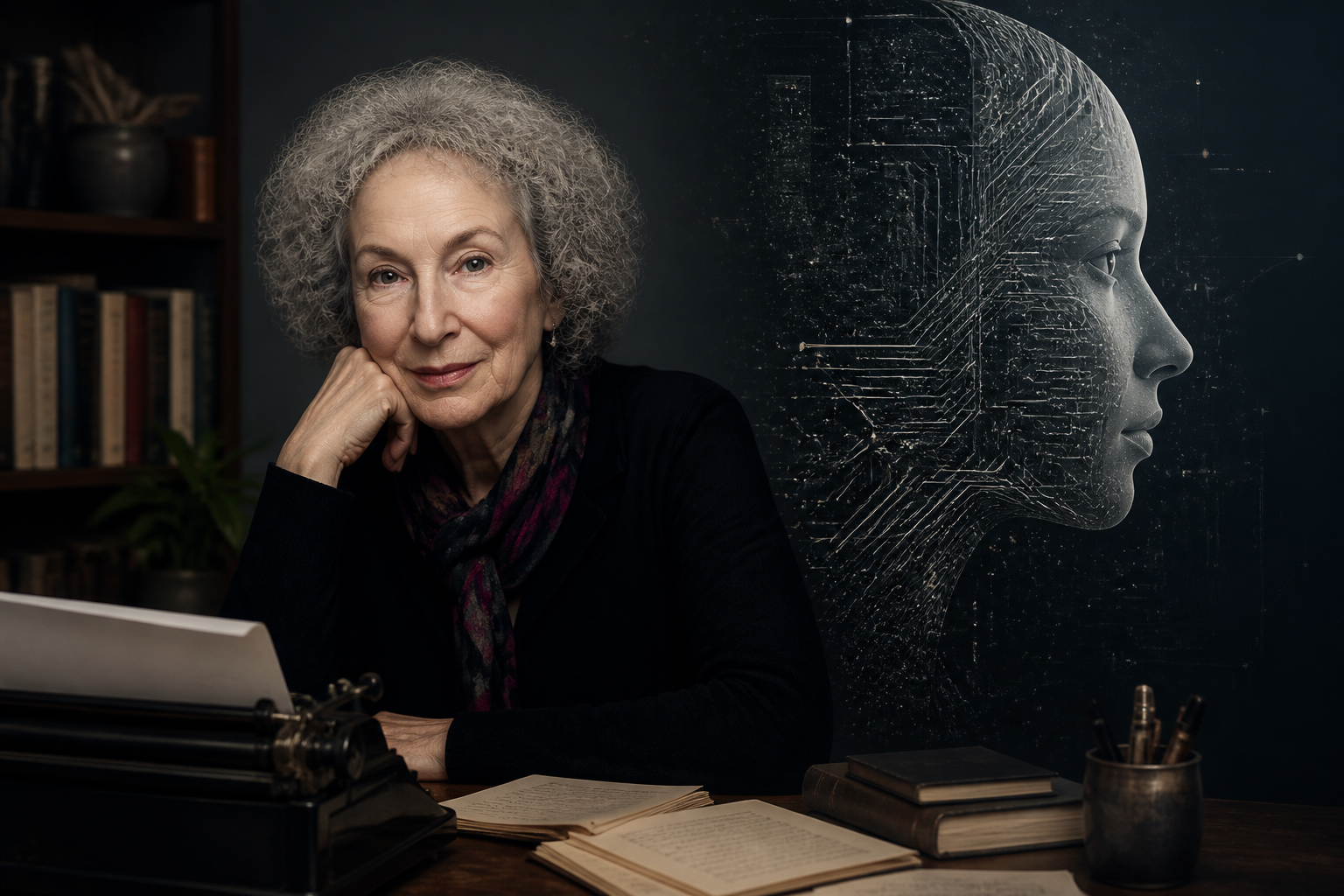
Margaret Atwood, the celebrated author known for works such as The Handmaid's Tale and The Blind Assassin, recently offered her insights on artificial intelligence during an appearance at the Babell Literary and Cultural Festival in Porto, Portugal. Her commentary touched upon common concerns within the creative community regarding AI's impact and its fundamental operational principles.
The 'Garbage In, Garbage Out' Principle
During her discussion, Atwood highlighted a critical limitation of AI systems, likening their output to the data they are trained on. She emphasized that if an AI is fed flawed or unoriginal material, its own creations will reflect that deficiency. This concept, often summarized as 'garbage in, garbage out,' suggests that the quality of AI-generated content is directly dependent on the quality of its source data. This perspective underscores the idea that AI, at its current stage, serves more as a sophisticated data processor than an independent wellspring of innovation.
AI as a Creative Tool
Despite her cautionary remarks, Atwood acknowledged experiencing AI's capabilities firsthand through interaction with systems like ChatGPT. Her engagement with these tools led her to observe that AI can synthesize information in a manner that might appear intelligent but fundamentally lacks original thought. She described the experience with AI as akin to encountering a form of 'clever mimicry' that can produce text resembling human writing, yet without the underlying understanding or emotional depth.
The Essence of Human Creativity
Atwood further posited that the distinction between human and artificial intelligence lies in the capacity for genuine creativity and comprehension. While AI can process vast amounts of data and identify patterns, it does not possess consciousness or the ability to generate truly novel concepts from scratch. She suggested that while AI might be able to assemble existing ideas in new configurations, it cannot originate ideas in the same way a human mind can.
Ethical Considerations and Future Implications
The conversation also implicitly touched upon the broader ethical concerns surrounding AI, particularly its potential influence on intellectual property and the future of creative professions. As AI tools become more sophisticated, questions arise about originality, authorship, and the economic implications for human artists and writers. Atwood's remarks contribute to an ongoing discourse about how society integrates advanced technology while preserving the unique value of human ingenuity.
Atwood's reflections at the festival provide a valuable contribution to the ongoing global conversation about artificial intelligence, offering a perspective grounded in the realities of creative work and the inherent limitations of current AI models.
Source: Margaret Atwood says the problem with AI is ‘garbage in, garbage out’ — The Verge. This article was rewritten by AI; please visit the original publisher for the source reporting.
Comments (0)
Sign in to leave a comment.