Bitcoin Declines Amidst Broader Market Shifts and Hawkish Federal Reserve Stance
Bitcoin has experienced a notable downturn, coinciding with a selloff in traditional precious metals like gold and silver. This decline appears to be linked to a hawkish Federal Reserve policy, which is altering investor perceptions of safe-haven assets.
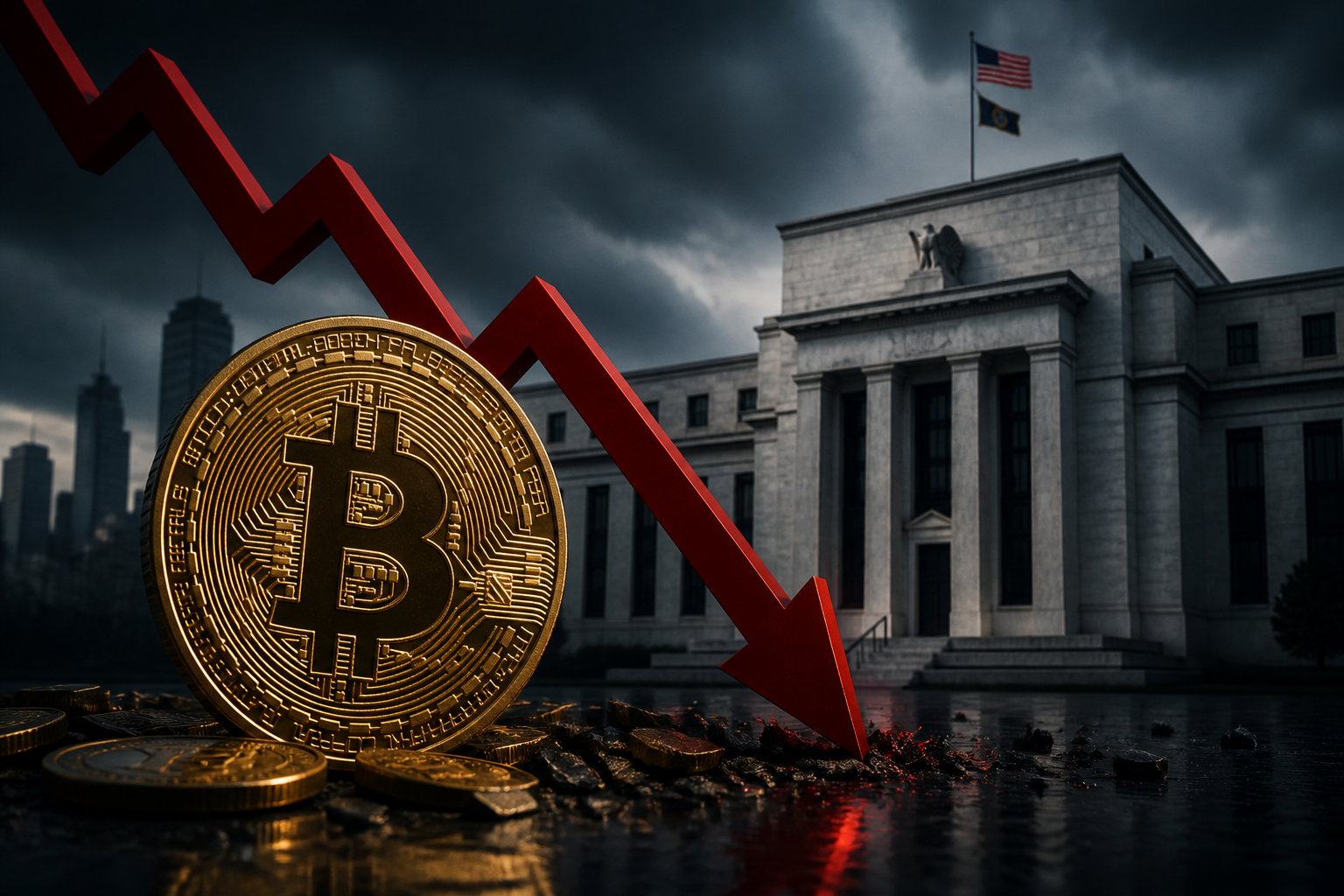
Bitcoin's value has recently declined, a movement observed in parallel with drops in the prices of gold and silver. This trend suggests a re-evaluation of financial assets that were previously considered hedges against economic uncertainty, particularly in light of evolving monetary policies.
The Shifting Landscape of Safe-Haven Assets
For an extended period, Bitcoin often found itself categorized alongside precious metals such as gold, serving as a perceived safeguard against the devaluation of the U.S. dollar. This investment strategy gained traction during times of quantitative easing and low interest rates, where investors sought alternatives to traditional fiat currencies.
However, recent market dynamics indicate a potential unraveling of this established correlation. The current economic environment, characterized by a more assertive stance from the Federal Reserve, appears to be influencing investor behavior across various asset classes.
Impact of Federal Reserve Policy
The Federal Reserve's hawkish posture, signaling a commitment to tighter monetary policy, plays a significant role in these market adjustments. When central banks adopt such stances, it typically involves measures intended to curb inflation, such as raising interest rates. These actions can increase the attractiveness of the dollar and government bonds, potentially reducing the appeal of alternative investments like precious metals and, by extension, cryptocurrencies.
The expectation of higher interest rates can lead investors to reallocate capital from assets that do not yield interest, or those perceived as riskier, towards more traditional interest-bearing securities. This shift can exert downward pressure on the prices of commodities and digital assets.
Bitcoin's Correlation with Traditional Assets
The recent synchronized decline of Bitcoin with gold and silver challenges the narrative that digital currencies operate entirely independently of traditional financial markets. While proponents often highlight Bitcoin's decentralized nature and limited supply as unique attributes, its price movements are increasingly reflecting broader macroeconomic trends. This suggests a growing integration of the cryptocurrency market into the wider financial ecosystem, where it is subject to similar influences as established assets.
This interconnectedness implies that factors affecting commodities and fiat currencies can also ripple through the digital asset space. Consequently, investors who previously viewed Bitcoin solely as a hedge against inflation or dollar weakness may be re-evaluating its role in diversified portfolios.
Market Repositioning and Future Outlook
The current market re-positioning underscores a challenging period for assets that benefited from the previous era of expansive monetary policy. As the global economic landscape continues to evolve, driven by central bank actions and inflation concerns, the relationships between various asset classes are also undergoing adjustments.
The ongoing re-assessment of risk and value by investors, prompted by a more restrictive monetary policy outlook, is a critical factor influencing the present downturn in both precious metals and digital currencies. The trajectory of these assets will likely remain closely tied to future macroeconomic indicators and the Federal Reserve's continuing policy decisions.
Source: Why a selloff in gold and silver is dragging bitcoin down — CoinDesk. This article was rewritten by AI; please visit the original publisher for the source reporting.
Comments (0)
Sign in to leave a comment.