Cyberpunk Visions: Reality Catches Up to Sci-Fi Predictions
Exploring how the futuristic world of cyberpunk literature, often characterized by advanced technology and societal shifts, has manifested in present-day innovations and challenges, particularly examining the intersection of artificial intelligence, biotechnology, and digital landscapes.
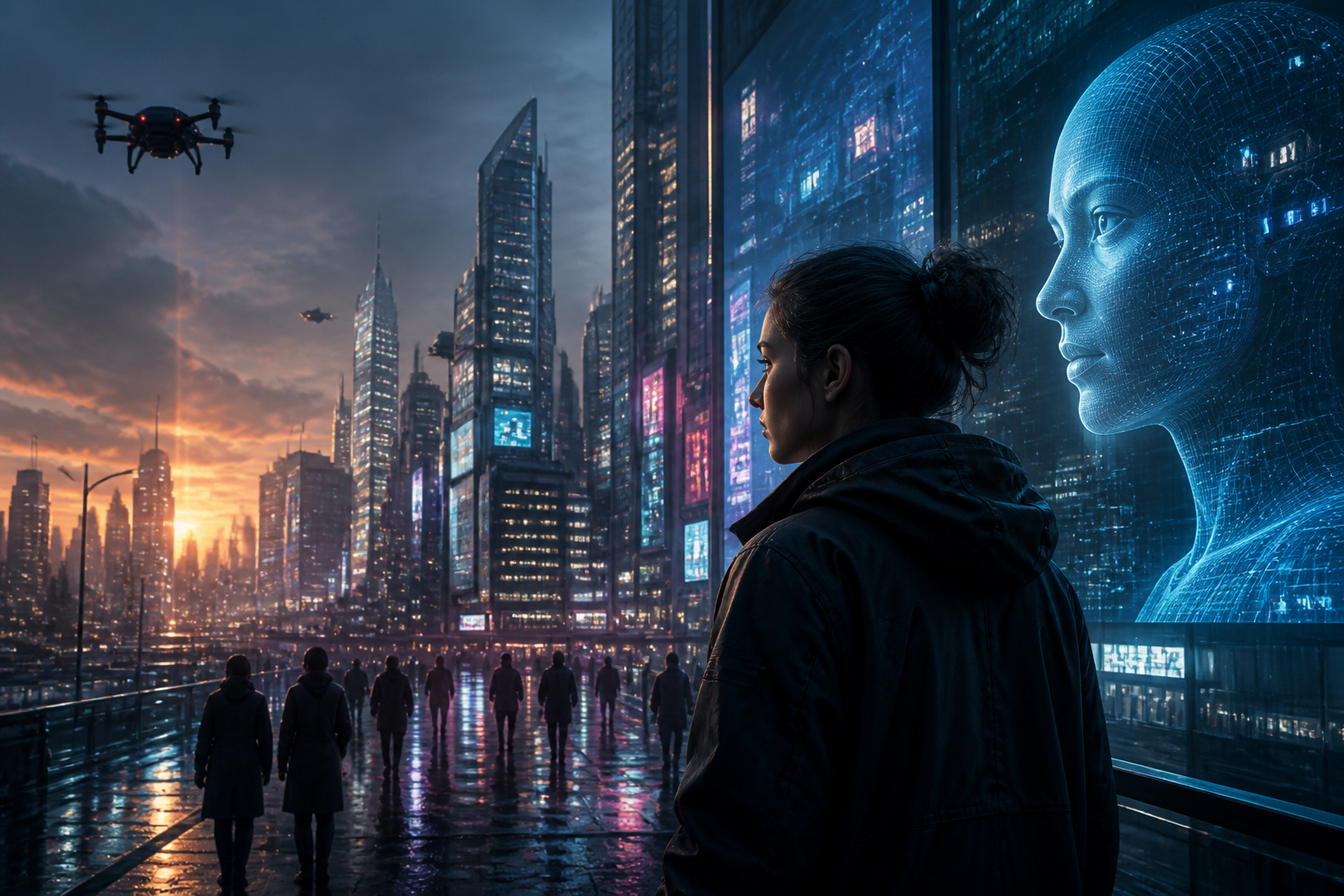
The genre of cyberpunk, once a realm of pure science fiction, is increasingly reflected in our contemporary technological landscape. While many associations with cyberpunk are overtly visual—gritty urban sprawls, neon lights, and elaborate prosthetics—the true foresight of the genre lies deeper, particularly in its predictions concerning the nature of technological advancement and its societal impact.
AI and the Digital Dominance
One of the hallmark elements of cyberpunk is the pervasive influence of artificial intelligence. Today, AI systems are deeply embedded in daily life, from personalized algorithms dictating online experiences to sophisticated machine learning models driving industries. While we may not yet have sentient, self-aware AI as depicted in some narratives, the rapid evolution of AI capabilities, including natural language processing and autonomous decision-making, mirrors the genre's foundational recognition of AI's transformative potential. The digital world, a central stage in cyberpunk, has also become a dominant force. The internet, alongside virtual and augmented reality, blurs the lines between physical and virtual existence, a theme frequently explored in classic cyberpunk texts.
Biotechnology and Human Augmentation
Another significant area where reality is catching up to fiction is in biotechnology and human augmentation. Brain implants and neuroprosthetics, once the stuff of futuristic tales, are now subjects of serious scientific research and development. Projects aiming to restore sight, facilitate communication for those with paralysis, or even enhance cognitive functions are moving from the theoretical to the practical. While widespread, elective neural implants for general population enhancement remain distant, the foundational steps toward integrating technology directly with biological systems are well underway. This progress echoes cyberpunk's fascination with the malleable nature of the human body and the ethical dilemmas posed by such advancements.
The Commercialization of Everything
Beyond the specific technologies, cyberpunk's most profound prediction may not have been a particular gadget or innovation, but rather the overwhelming commercialization and datafication of human experience. The genre often portrays worlds where corporations wield immense power, where personal data is a valuable commodity, and where surveillance is a constant. In our current era, the collection and analysis of vast amounts of personal data by tech companies, the rise of targeted advertising, and the pervasive nature of digital monitoring all resonate with these themes. The economic structures and power dynamics envisioned by cyberpunk authors, where technology often serves as a tool for control and profit, find parallels in contemporary debates surrounding data privacy, corporate influence, and the digital economy.
The Blurring Lines
Ultimately, cyberpunk's enduring relevance stems from its ability to anticipate how technology would not merely change our tools, but fundamentally alter society, human interaction, and our understanding of self. The lines between human and machine, reality and simulation, individual and corporation, continue to blur in ways that echo the speculative fiction of decades past. The future, in many respects, has indeed arrived in a form that cyberpunk narratives once only imagined.
Source: The Future Cyberpunk Imagined Is Here: How Much Did It Get Right? — Decrypt. This article was rewritten by AI; please visit the original publisher for the source reporting.
Comments (0)
Sign in to leave a comment.