Demystifying Artificial Intelligence: A Glossary of Essential Terms
The rapid advancement of artificial intelligence has introduced a new lexicon that can be challenging to navigate. Understanding key AI terminology is crucial for anyone engaging with this transformative technology. This article provides a comprehensive overview of fundamental AI concepts, helping to clarify common terms and their significance.
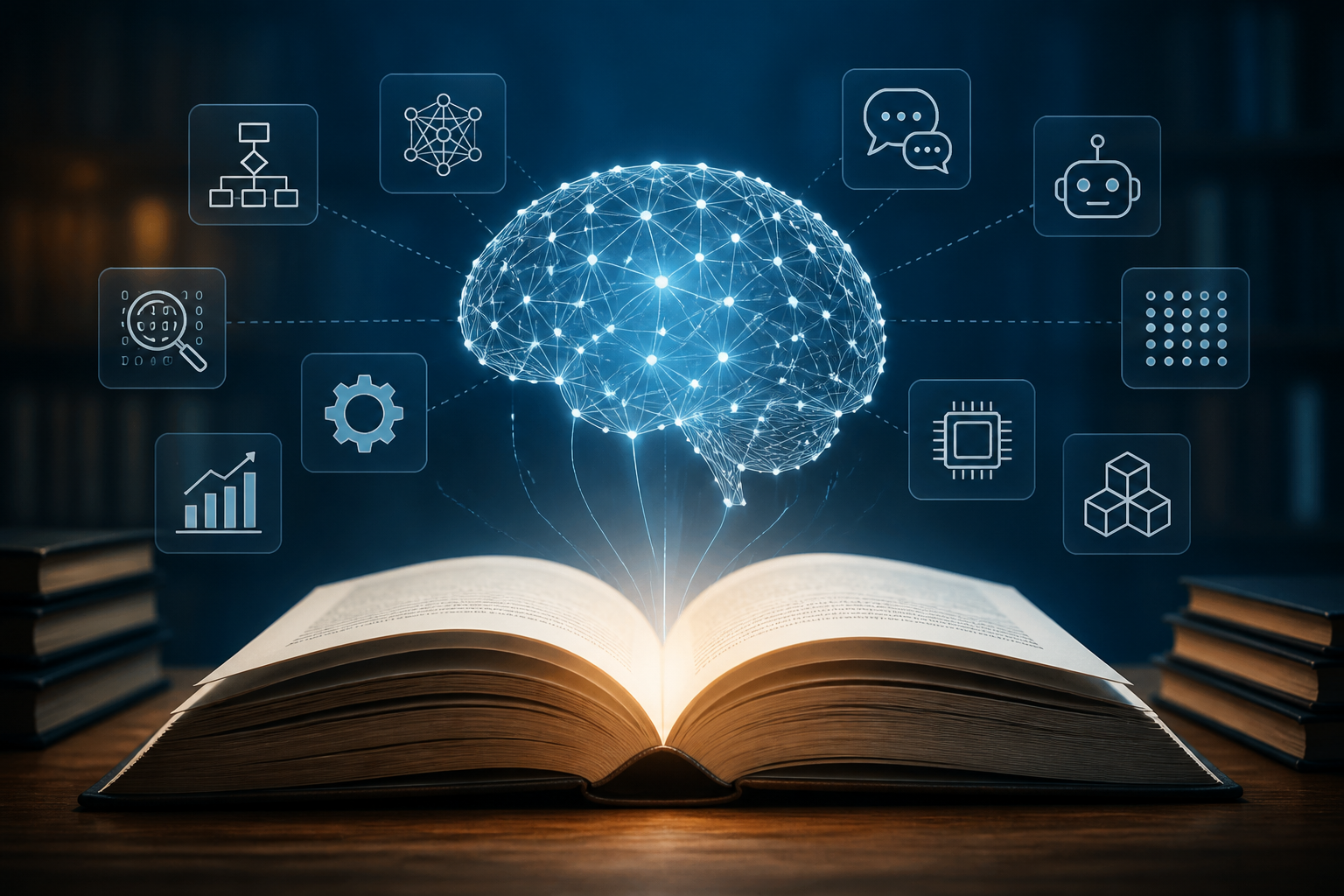
Understanding the AI Lexicon
The landscape of artificial intelligence is continuously evolving, bringing with it a specialized vocabulary that can often seem daunting. As AI integrates further into daily life and various industries, a clear understanding of its core terminology becomes increasingly vital. This guide aims to elucidate some of the most frequently encountered terms, offering clarity on their meanings and implications.
Core Concepts in Artificial Intelligence
At its heart, artificial intelligence refers to the simulation of human intelligence processes by machines, particularly computer systems. These processes include learning, reasoning, problem-solving, perception, and language comprehension. The overarching goal of AI research is to create systems that can operate autonomously and intelligently to perform tasks that typically require human intellect.
Machine Learning: The Engine of AI
Within the broader field of AI, machine learning (ML) stands out as a critical subfield. Machine learning empowers systems to learn from data without explicit programming. Instead of being given step-by-step instructions, ML models identify patterns within vast datasets, enabling them to make predictions or decisions. This ability to learn from experience is fundamental to many contemporary AI applications, from recommendation systems to predictive analytics.
Supervised, Unsupervised, and Reinforcement Learning
Machine learning itself is often categorized into several paradigms:
- Supervised learning: Involves training models on labeled datasets, meaning each piece of data is paired with the correct output. The model learns to map inputs to outputs based on these examples.
- Unsupervised learning: Deals with unlabeled data, where the model
Source: So you’ve heard these AI terms and nodded along; let’s fix that — TechCrunch. This article was rewritten by AI for original phrasing; please visit the original publisher for the source reporting.
Comments (0)
Sign in to leave a comment.