Google CEO Encounters Student Protest at Stanford Graduation
Sundar Pichai, CEO of Google, faced a student protest during a Stanford University graduation ceremony, with demonstrations primarily focused on Google's involvement in defense contracts and collaborations with government agencies.
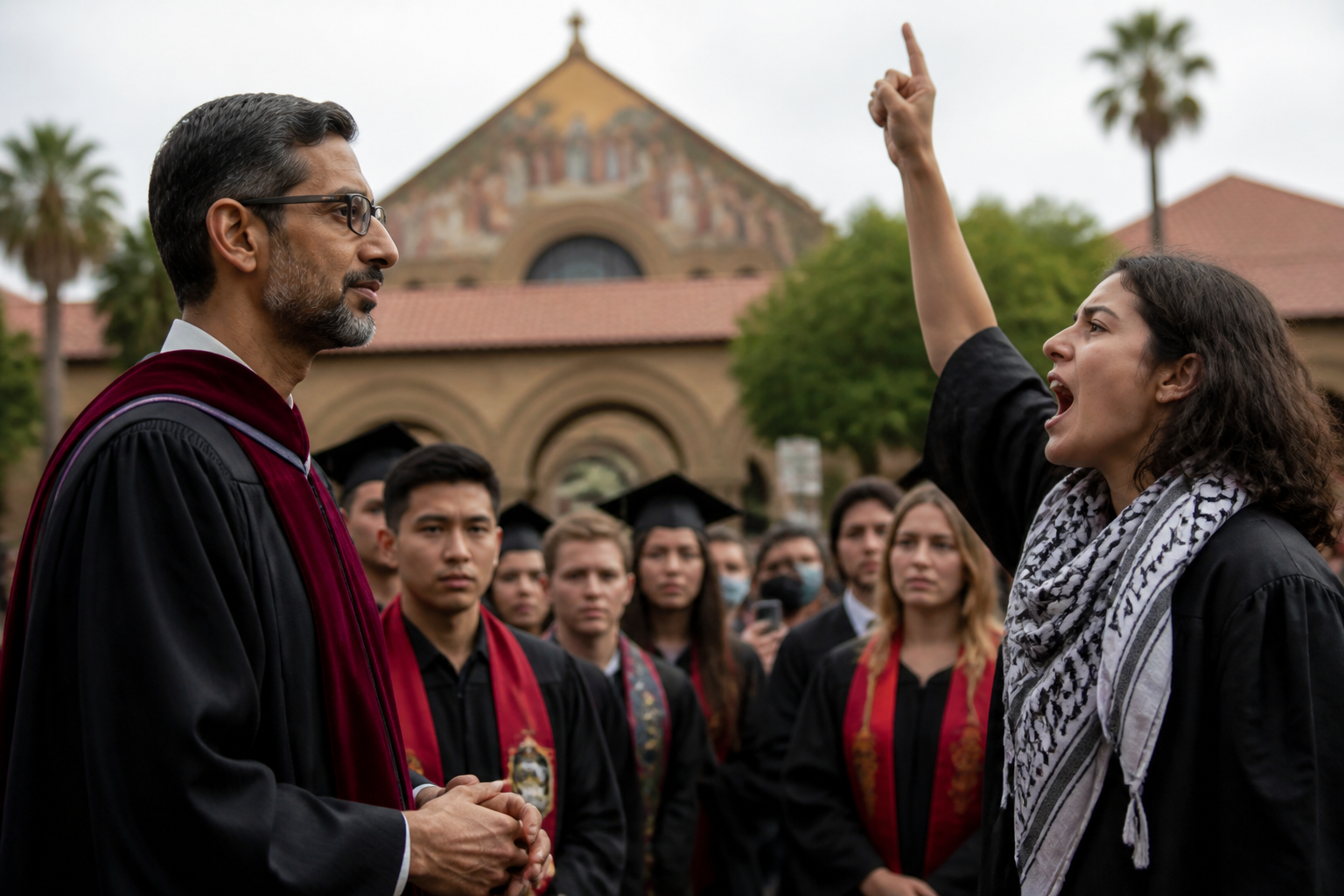
Incident at Stanford Graduation
Sundar Pichai, the chief executive officer of Google, encountered a notable student protest during a graduation ceremony at Stanford University. The demonstrations included audible disapproval and a student walkout, drawing attention to specific aspects of Google's business practices.
The core of the protest focused on two primary areas: Google's alleged involvement in defense contracts with the Israeli military and its collaborations with U.S. Immigration and Customs Enforcement (ICE). These issues have previously generated discussion and internal debate within the technology company.
Concerns Over Defense Contracts
Student activists at the ceremony expressed strong objections to Google's Project Nimbus, a significant cloud computing and artificial intelligence contract with the Israeli government. Critics argue that this project could potentially contribute to actions conflicting with human rights principles. This sentiment mirrors broader ethical considerations arising from the deployment of advanced AI technologies in military and law enforcement contexts. The development and application of AI for defense purposes have become a recurring point of contention within the tech industry and academic circles.
Scrutiny of Government Collaborations
Another point of contention highlighted by the protestors was Google's historical and ongoing contracts with ICE. These agreements involve providing technology and services to the agency, which some critics contend assists in immigration enforcement operations they deem controversial or unjust. The ethical implications of tech companies providing infrastructure and tools to government bodies involved in sensitive social and political issues have been a subject of increasing public and employee scrutiny.
Broader Context of Tech and Activism
This incident at Stanford is not an isolated event but rather indicative of a growing trend in which students and tech workers are actively challenging the ethical frameworks and societal impacts of large technology companies. Past protests at academic institutions and within various tech firms have frequently cited concerns over AI ethics, data privacy, and collaborations with government or military entities. These acts of dissent underscore a societal expectation for technology leaders to address the moral and ethical dimensions of their company's operations and technological advancements.
The incident at Stanford underscores the ongoing tension between technological innovation and public accountability, particularly as AI capabilities expand into increasingly sensitive domains. It reflects a persistent dialogue about the responsibilities of tech giants and their leadership in navigating complex geopolitical and social landscapes. The protests serve as a visible manifestation of stakeholders demanding greater transparency and adherence to ethical guidelines from influential corporations in the technology sector.
Source: Sundar Pichai faces boos, walkout at Stanford graduation ceremony over Google’s Israel, ICE ties — TechCrunch. This article was rewritten by AI; please visit the original publisher for the source reporting.
Comments (0)
Sign in to leave a comment.