Proposed Legislation Aims to Prohibit Lawmakers from Prediction Market Participation
A new bill introduced in the House of Representatives seeks to prevent members of Congress and their immediate families from engaging in prediction market activities related to policy matters, addressing concerns about potential insider trading.
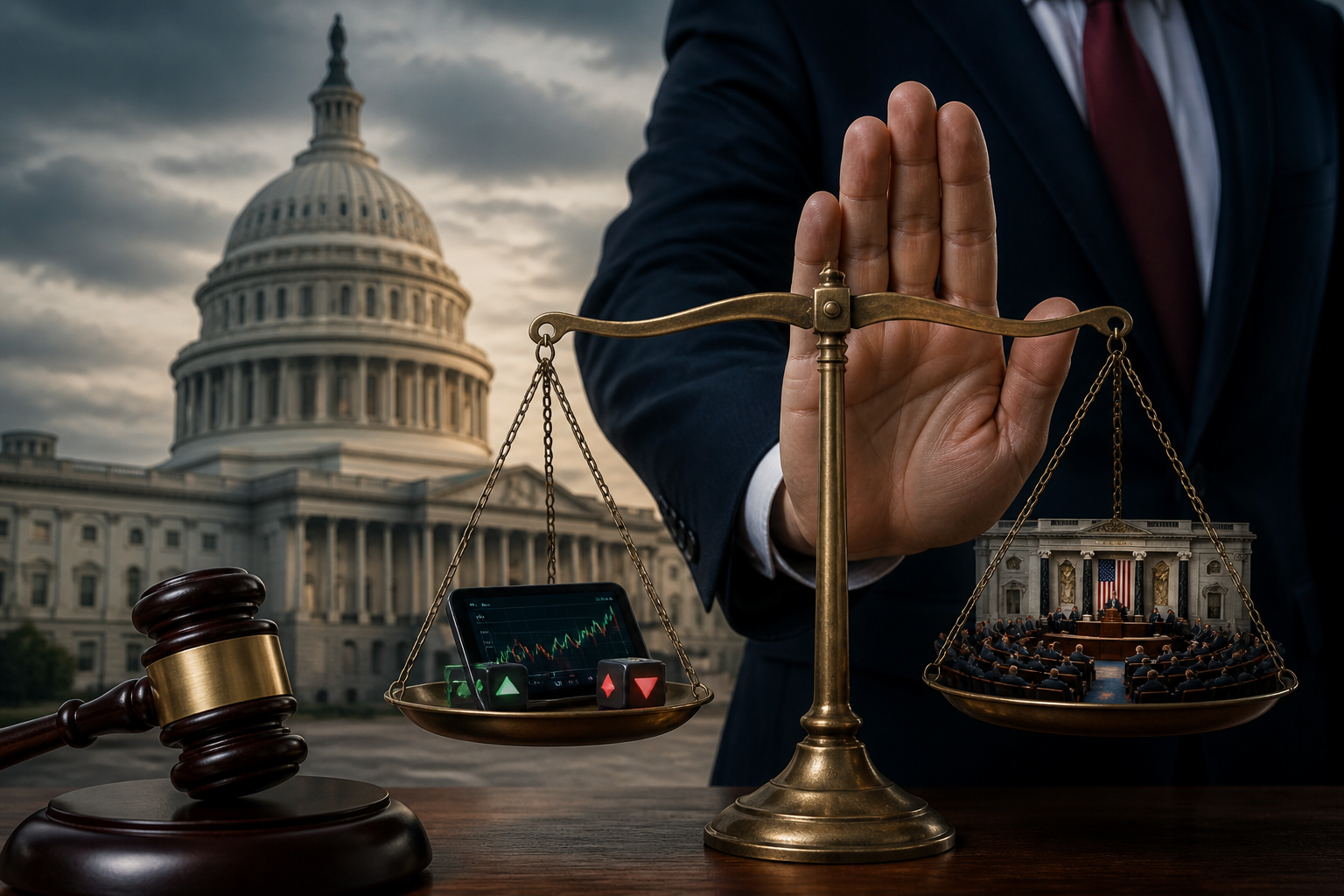
A legislative proposal has been put forth in the U.S. House of Representatives, aiming to restrict members of Congress and their close family members from making wagers on prediction markets when those bets pertain to governmental policy. The initiative is designed to mitigate the risks associated with insider trading, particularly within the unpredictable landscape of policy forecasting.
Ethical Concerns in Policy Forecasting
Prediction markets, platforms where participants can bet on the outcomes of future events, have gained traction in various sectors, including politics. While often seen as a tool for aggregating information and forecasting public sentiment, their intersection with legislative activities raises significant ethical questions. The core concern revolves around the potential for individuals with privileged information—such as lawmakers privy to upcoming policy decisions—to leverage that knowledge for financial gain.
The Scope of the Proposed Ban
The proposed legislation broadly targets individuals directly involved in the legislative process. This includes not only elected representatives themselves but also their spouses and dependent children. The intent is to create a comprehensive barrier against the misuse of confidential legislative information. The prohibition would specifically apply to prediction market contracts that are directly influenced by governmental actions, decisions, or the trajectory of public policy debates.
Defining Prediction Markets
Prediction markets operate on a simple premise: individuals trade contracts whose value is tied to the likelihood of a future event occurring. For example, a contract predicting the passage of a specific bill might increase in value as the bill gains momentum and decrease if its prospects dim. These markets are often utilized for forecasting elections, economic indicators, and even technological advancements. However, when elected officials participate in markets directly tied to their own legislative work, conflicts of interest can arise.
Addressing Insider Information Challenges
The impetus behind this bill is to maintain public trust in the integrity of the legislative process. Lawmakers frequently have access to non-public information concerning pending legislation, regulatory changes, or governmental investigations. This information, if used in prediction markets, could provide an unfair advantage over other participants, undermining the principle of fair play and transparent governance.
Precedent in Financial Regulations
The concept of restricting individuals with insider knowledge from profiting on that information is well-established in financial markets. Regulations against insider trading in the stock market, for instance, aim to ensure that all investors have access to the same information, preventing those with privileged access from exploiting it. The proposed prediction market ban extends this ethical framework to the realm of legislative prognostication, highlighting a growing awareness of new avenues for potential conflicts of interest.
Potential Impact and Broader Implications
If enacted, this bill could set a new precedent for ethical conduct in government, further delineating the boundaries between public service and personal financial activities. It also reflects an ongoing effort to adapt existing ethical guidelines to continually evolving technological landscapes, where new platforms and financial instruments can create unforeseen challenges for oversight and accountability. The discussion surrounding this legislation underscores the importance of stringent ethical standards for public officials in an increasingly complex and interconnected financial world.
Source: House Republican Introduces Insider Trading Bill to Ban Lawmaker Prediction Market Bets — Decrypt. This article was rewritten by AI; please visit the original publisher for the source reporting.
Comments (0)
Sign in to leave a comment.