The Evolution of Robotic Home Cleaning
Examining the origins and development of the Roomba robot vacuum, from its early, basic functionalities to its current, more advanced iterations.
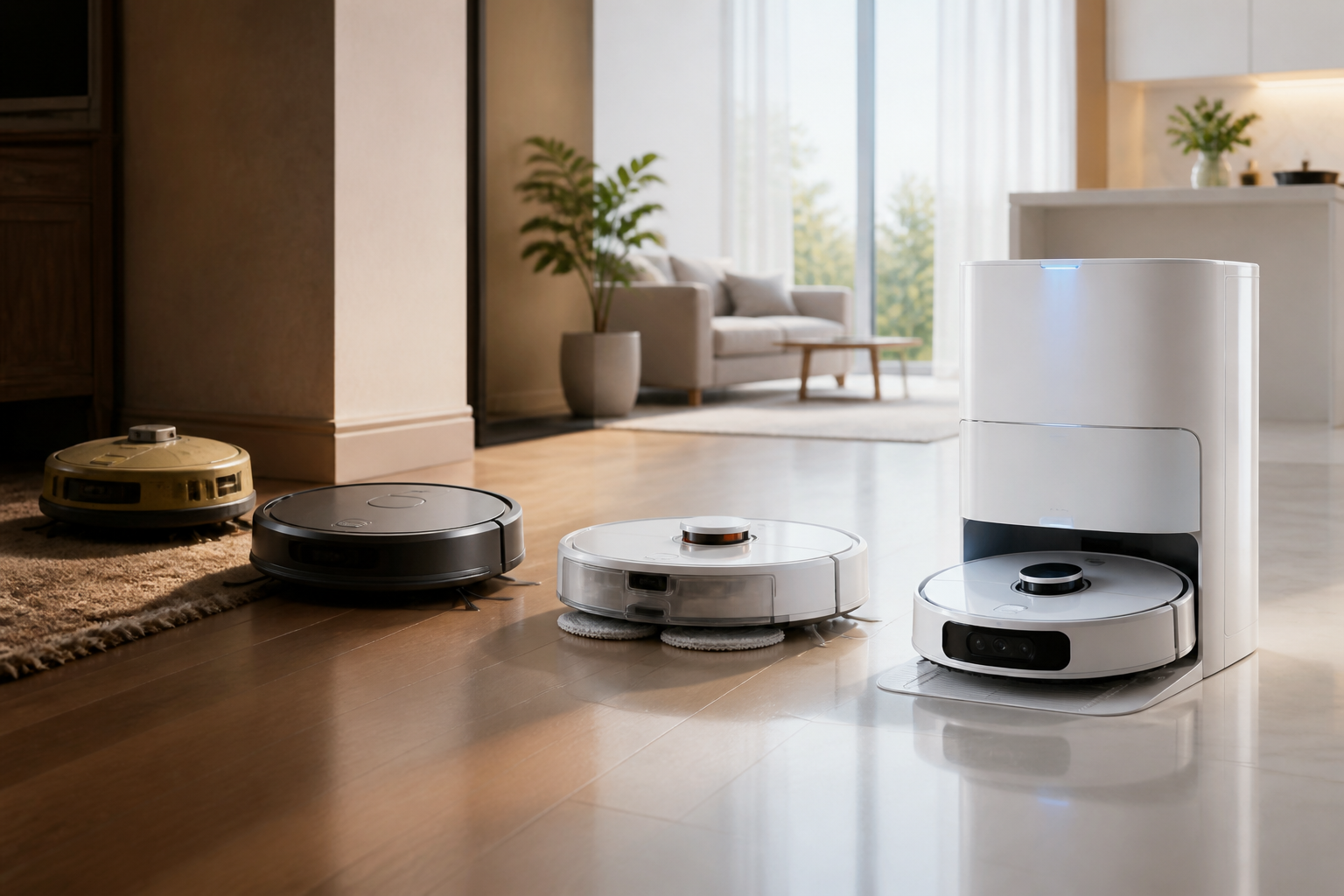
The advent of the robotic vacuum cleaner, exemplified by the Roomba, marked a significant shift in household automation. In its initial conception, the device presented a relatively straightforward approach to cleaning, navigating spaces by detecting obstacles and collecting debris until operational limits, such as battery depletion or dustbin capacity, were reached. Despite these early constraints, the introduction of such a device resonated with consumers, hinting at a future where automated solutions could significantly contribute to daily chores.
Early Design and Functionality
During its nascent stages, the Roomba operated on a principle of reactive navigation. Rather than employing complex mapping algorithms, it relied on a system of bump sensors to identify boundaries and impediments within a room. This method, while not always efficient by today's standards, allowed the device to systematically traverse an area, albeit with an element of randomness. The goal was simple: to continuously sweep and vacuum until its power source was drained or its collection bin required emptying. The relatively small size of these early dustbins often meant frequent manual intervention was necessary, a trade-off many users accepted for the convenience of automated cleaning.
The Promise of Automation
The initial market reception for the Roomba underscored a broader societal interest in automated home appliances. Even with its basic functionalities, the device offered a glimpse into a potential future where robots could handle mundane tasks, freeing up human time and effort. This early success wasn't necessarily contingent on perfect execution but rather on the innovative concept itself—a machine that could independently clean floors without constant human direction.
Technological Advancements and Future Outlook
Over the years, the technology underpinning robotic vacuum cleaners has seen substantial improvements. Modern devices often incorporate sophisticated sensors, artificial intelligence, and advanced mapping capabilities, allowing for more efficient and thorough cleaning patterns. These advancements have transformed the user experience, moving beyond simple obstacle avoidance to intelligent room navigation, selective cleaning, and even integration with smart home ecosystems. The progression of these machines reflects a larger trend in consumer technology towards increasingly autonomous and integrated solutions, continually redefining the scope of convenience in the home.
Source: How Roomba started a robot revolution — The Verge. This article was rewritten by AI; please visit the original publisher for the source reporting.
Comments (0)
Sign in to leave a comment.